

Because language is a map, not the territory. The moment we try to pin down the tremor of devotion, the cartography cracks. Yet we keep speaking, writing, whispering—hoping the next sentence will finally hold the weight.
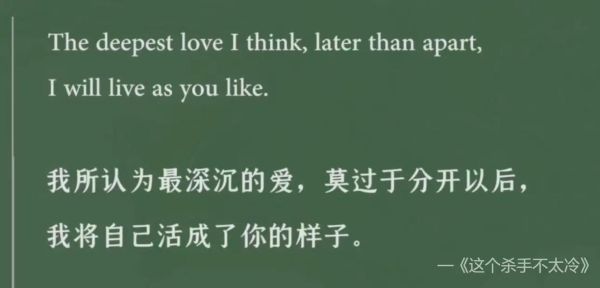
Ask any native speaker and they’ll confess: those three words can clang like an empty tin when spoken on autopilot. The phrase has been flattened by pop songs, greeting cards, and movie trailers. **Repetition erodes resonance.** So how do we restore the echo?
When I coach couples writing their vows, I ban the word “amazing.” It’s a balloon adjective—bright but empty. Instead, I ask them to finish the sentence: “Loving you is like…” The metaphors that surface are startlingly intimate: “Loving you is like translating a poem I’m still writing,” one groom told me. **Metaphor invites the listener into co-creation; definition shuts the door.**
During a silent retreat in Wales, I noticed partners communicating entire paragraphs through synchronized breathing. Linguists call this “interactional synchrony.” The takeaway? **Sometimes withholding words magnifies presence.** A well-timed pause after “I…” can stretch the moment into infinity.
Functional MRI studies show that **novel praise activates the ventral striatum more intensely than familiar endearments.** Swap “You’re beautiful” for “The way you mispronounce ‘library’ makes me want to build you one.” The brain registers the anomaly and releases dopamine—proof that originality is an aphrodisiac.
Deep love demands nakedness, yet oversharing can drown the other person. My rule of thumb: **lead with 70% disclosure, leave 30% breathing room.** Example: “I keep your voicemails in a folder labeled ‘Proof I’m Real’—but I still can’t listen to the third one without crying.” The partial curtain invites curiosity instead of claustrophobia.

“Betwixt,” “forsooth,” “belike”—archai *** s can feel campy, yet when deployed sparingly they cut through modern noise. Try texting: “I’m forsworn to my phone tonight, yet my thoughts keep orbiting thee.” The contrast between archaic diction and digital medium creates a jolt of sincerity.
Absolutely. The subjunctive mood—rare in English—carries longing: “If I were the air, I’d inhabit your lungs differently.” The conditional tense softens certainty into yearning. **Grammar is not a cage; it’s a pulse you can modulate.**
After decades of writing love letters, I’ve discovered the most devastating sentence isn’t “I love you” but **“I notice everything.”** It implies relentless attention, the rarest currency in a distracted age. Say it once, then prove it forever.
发表评论
暂时没有评论,来抢沙发吧~